We are shipping worldwide!














Silk of the Seasons: Matching Your Saree to the Calendar
Jul 27, 2026
By
Priyadharshini
1 comment(s)
A saree that's perfect for a winter wedding can feel like wearing a blanket in May. One built for a hot afternoon might look thin and out of place at a formal winter reception. Choosing by weight and season — not just color and pattern — makes a real difference in how a saree actually feels to wear.
Summer: Lighter Weaves, Breathable Builds
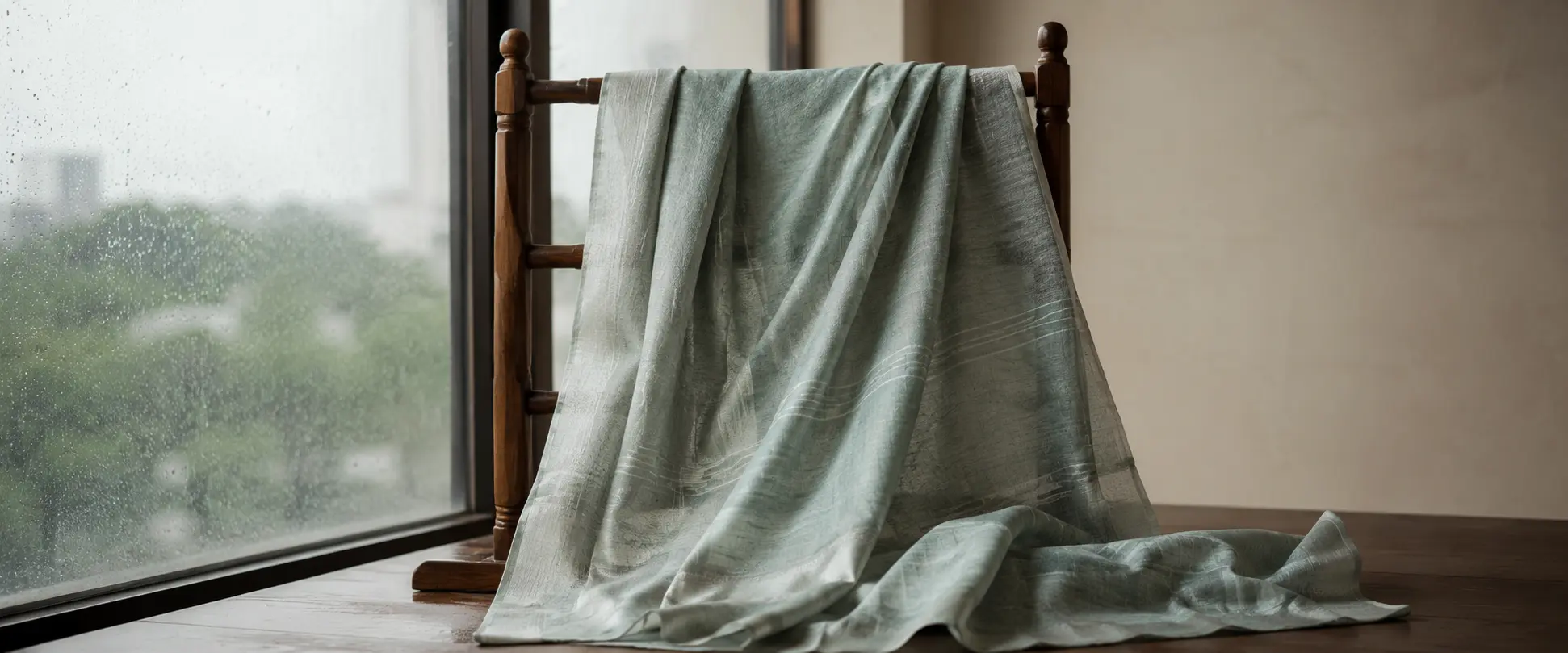
Heavy zari and dense silk are the last thing you want against your skin in peak summer heat. Chanderi, with its sheer, lightweight silk-cotton blend, and Tussar silk, with its natural breathability and slightly textured feel, are far more forgiving in hot weather than a heavy Kanjivaram or Banarasi. Lighter, more muted colors also tend to feel visually cooler and show less strain from a warm day than deep, saturated jewel tones.
Fabric care matters just as much as fabric choice here. Heat and sweat are harder on silk than most people realize — a light dusting of talc-free antiperspirant before draping, rather than spraying it directly onto the fabric, helps avoid the yellow staining that shows up on pale Chanderi and Tussar over time. If you're travelling for a summer event, carry your saree folded with the pallu on the outside rather than tightly rolled — silk creases sit differently under heat and humidity, and a rolled pallu tends to hold stubborn lines that don't fall out easily once you're there.
Monsoon: Practical Over Precious
Monsoon season is genuinely hard on delicate silk and real zari — humidity can tarnish metallic thread over time, and an unexpected downpour can permanently damage a piece you'd rather not risk. It's worth reserving your most valuable handloom silks for indoor, dry-weather occasions during these months, and leaning on lighter, lower-maintenance fabrics for daily wear or unavoidable outdoor plans. This is also a good stretch of the year to double down on the storage and humidity care covered in our saree care guide — trapped moisture during monsoon months is when pest and mildew problems tend to start.
If a downpour does catch a silk saree off guard, resist the urge to wring or twist the fabric — blot the excess water gently with a dry cloth and let it air dry away from direct heat or sunlight, which can set water stains permanently into both the silk and the zari. For daily monsoon wear, synthetic or semi-synthetic blends genuinely earn their place in a wardrobe this time of year — they dry faster, resist water spotting, and won't tarnish the way real metallic zari can, making them a practical trade-off rather than a downgrade.
Winter: Room for Weight and Richness
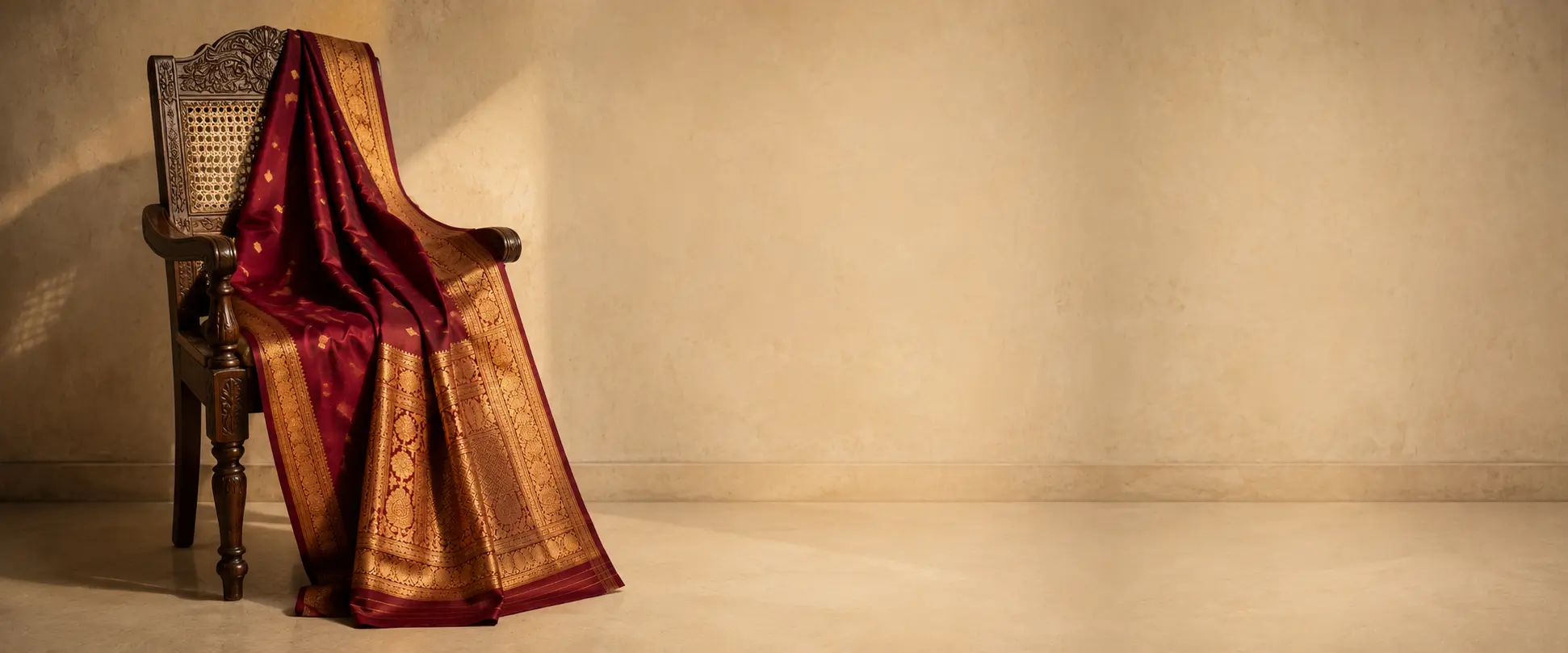
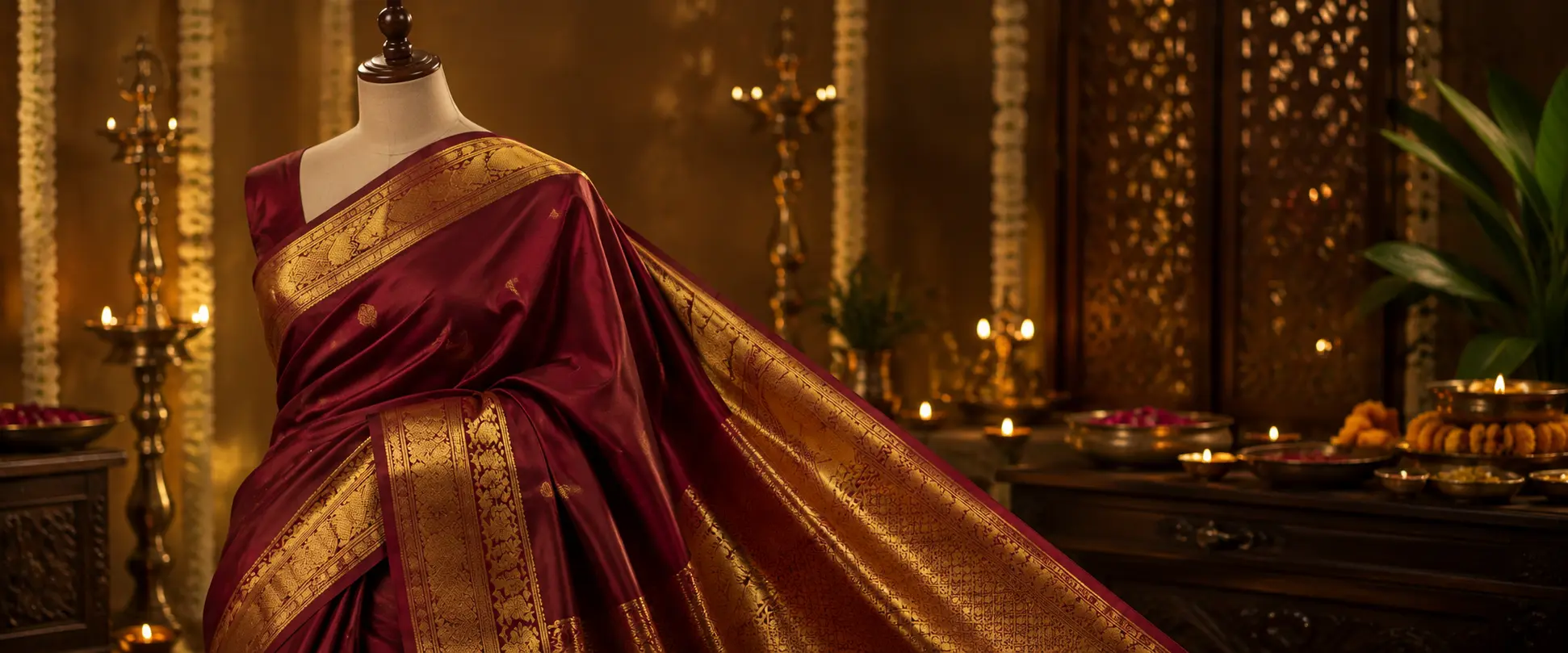
Cooler months are when heavier silks genuinely earn their keep. A structured Kanjivaram or a densely worked Banarasi feels appropriate rather than excessive once the temperature drops, and this is also when India's wedding season is in full swing — which is no coincidence. Deeper, richer colors — maroon, emerald, royal blue, deep gold — read as festive and suit the season's low, warm light far better than pastels do.
Layering also becomes an option in cooler months in a way it simply isn't in summer — a light shawl or stole in a complementary or contrasting shade adds warmth without competing with the saree's own zari work, and it's a detail you'll see often at winter weddings for exactly that reason. Heavier silks also drape differently in the cold; the fabric holds pleats more crisply than lighter weaves do, which is part of why Kanjivaram and Banarasi photograph so well at winter events — the structure simply holds up better through a long day of standing, sitting, and moving around.
A Quick Festival Guide
- Navratri: widely observed with a different color assigned to each of the nine days, tied to different forms of Goddess Durga — colors commonly cited include white, red, royal blue, yellow, green, and peacock green, though the exact day-by-day sequence varies by region and source. It's a fun, low-stakes excuse to work through several different saree colors across one festival week.
- Durga Puja (West Bengal): the white-bodied, red-bordered "laal paar" saree is an iconic and widely recognized sight during this festival, especially during rituals like Sindoor Khela.
- Onam (Kerala): the Kasavu saree — off-white or cream with a gold zari border — is the defining look of the festival, valued for its understated elegance rather than heavy ornamentation.
- Diwali: tends to favor richer jewel tones and more heavily worked silks, in keeping with the festival's emphasis on light, prosperity, and celebration.
- Pongal / Sankranti: South Indian silks in bright, traditional colors are common, often tied to harvest-season celebration and new beginnings.
These are widely observed customs rather than fixed rules — regional and family traditions vary, and there's real value in following what your own community or household observes over a generic list.
Building a Saree Wardrobe Around the Calendar
Rather than buying reactively for each event as it comes up, it can help to think of your saree collection as covering a few key categories: one or two lightweight pieces for hot-weather daily wear or casual events, a couple of mid-weight silks for regular festive occasions, and one or two serious, heavily worked pieces reserved for weddings and major celebrations. Built this way, your existing collection ends up covering most of the calendar without needing a new purchase for every single occasion.
Explore our silk saree collection to find pieces that suit the season you're dressing for right now.
What's your go-to saree for your favorite festival? Tell us in the comments — we might feature it in a future post.
1 Item